
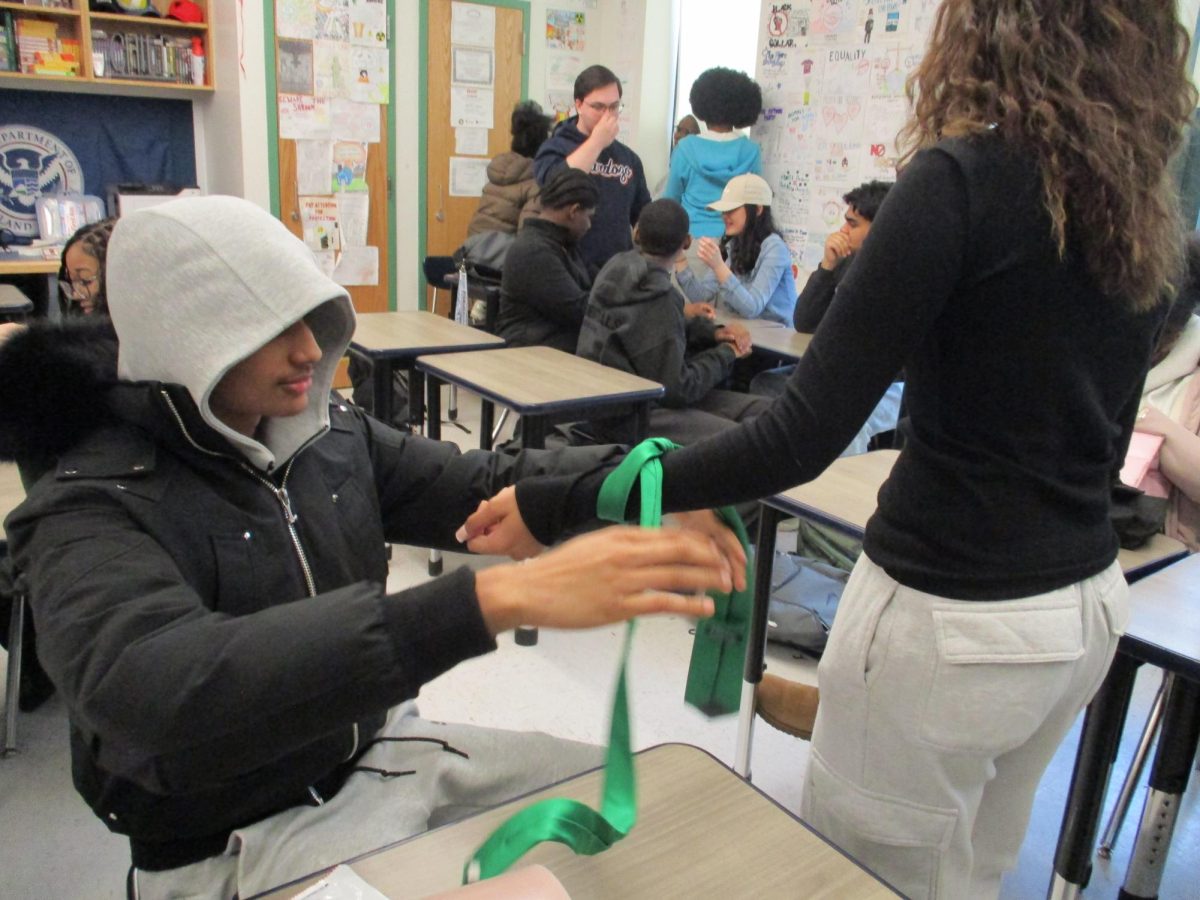
One of the many real-life skills that is taught in the classrooms of Cardozo is in Mr. Handell’s homeland security class. Associated with the law program, Mr. Handell runs a “Stop the Bleed” course that teaches students valuable skills on how to stop bleeding from various situations such as a car crash, a stabbing, or a shooting.
Certified EMT and social studies teacher Mr. Handell works on Long Island as an EMT and has the proper training to teach these particular skills. In his homeland security class, he teaches 10th grade students about all aspects of homeland security, such as U.S. agencies like the Department of Homeland Security and the National Security Agency. However, one of the most memorable lessons students have in the course is Stop the Bleed.
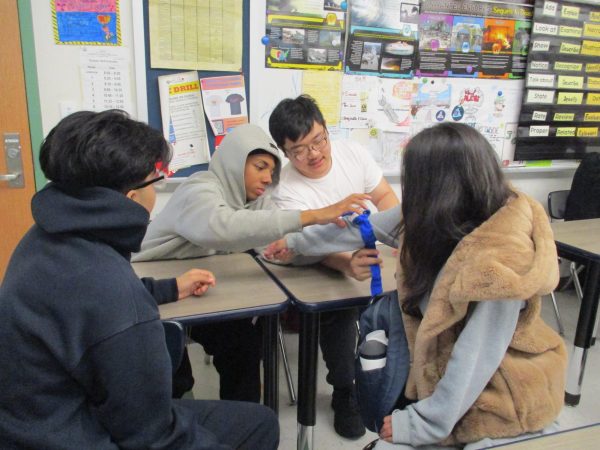
The program was created as a result of the Sandy Hook Elementary school shooting. Many of the people that died lost their lives due to blood loss. Ever since this incident, the Stop the Bleed program has been extensive all throughout the U.S., not only for students, but for everyone to learn these important skills in case they were ever put in a situation to save someone’s life.
“It takes anywhere from 30 seconds to five minutes for someone to bleed out,” Mr. Handell explained. “I truly believe this skill is incredibly important.” The training emphasizes that before helping anyone, students must first ensure scene safety. Rushing into a dangerous situation without awareness can put more lives at risk.
He teaches students that the first action is to ensure that the scene is safe, because they won’t know if the danger is still present. Once the individual is sure that the scene is safe, the number one priority before calling emergency services is stopping the bleeding.
Mr. Handell mentioned that several years ago, a situation took place at Cardozo where a student was slashed in the face. When a bystander student saw the slashed student bleeding, their first instinct was to head to the nurse’s office to get a kit and to alert individuals. However, Mr. Handell claimed that was a mistake, because the lashed student ended up losing immense amounts of blood and was the on the verge of dying. This lesson therefore allows for students to gain the necessary skills to help their peers in dire situations such as that.
One of the most important techniques to help stop bleeding is by using the most common technique, direct pressure. This technique is where a person uses a piece of cloth or fabric and uses their palm, locks their elbows, and applies pressure on the wound so the bleeding is stabilized. This common technique saves many lives.
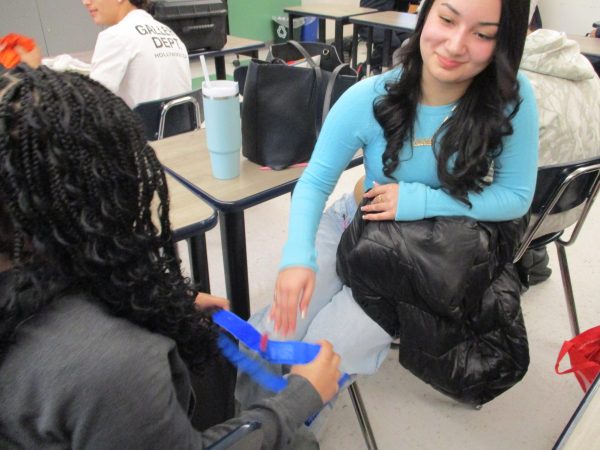
An alternative way to stop bleeding is by wound packing and tourniquet application. This is where individuals place a tourniquet two to three inches above the actual wound. This allows the blood flow to slow down. Although the tourniquet can be effective, it comes with a lot of pain, as shown in the classroom where a student participated in a demonstration by Mr. Handell of how to apply a tourniquet. Mr. Handell also showcased a demonstration of how he used a tie and pen to apply a tourniquet, showcasing that you have to utilize what you have around you creatively and effectively.
Students were able to experiment with the tourniquet and items that were present in the classroom, allowing students to learn and gain hands-on experience.
“It was really useful and interactive,” student Alia Hasnat mentioned. “You learn that even something around you, like clothing or a random object, can be used to save someone’s life in a life-or-death situation.”
In 2017, a shooting in Las Vegas left 59 people dead and 867 people injured, however, many citizens at the scene implemented techniques to stop the bleeding of victims of the shooting, saving many lives on the scene.
“In many cases, it takes about nine minutes for EMTS to get to the scene,” Mr. Handell said. “In that time, the people already there are the real first responders.”