
Throughout history, people tend to only remember what they want; especially when it comes to Civil Rights and minorities. Knowing that society has many individual voices that go unheard, Cardozo’s junior U.S. History classes highlight these as a core focus of the curriculum.
Hidden voices are the voices we don’t hear about as much throughout history. The voices that are often covered by more influential speakers, voices behind ideas that society chooses to credit to bigger bodies. To truly hear someone is to know the thought process behind them, what makes them who they are, and what they stand for. To know why, to understand, to connect with them.
Many of the students who were part of the Hidden Voices project chose to study figures that otherwise would have been overlooked and got the opportunity to explain to their peers, their community and even got the chance to reach out to New York City Department of Education officials to explain why these figures should be added to the U.S. History curriculum in New York State.
Students studied the history behind mathematicians, soldiers, authors, inventors and many more. Students also had the opportunity to study hidden voices from various cultures and backgrounds to further understand how these ethnic backgrounds can bring society closer together in such a diverse country. Studying these figures not only brings awareness to their purpose, but also their perspective in American culture.
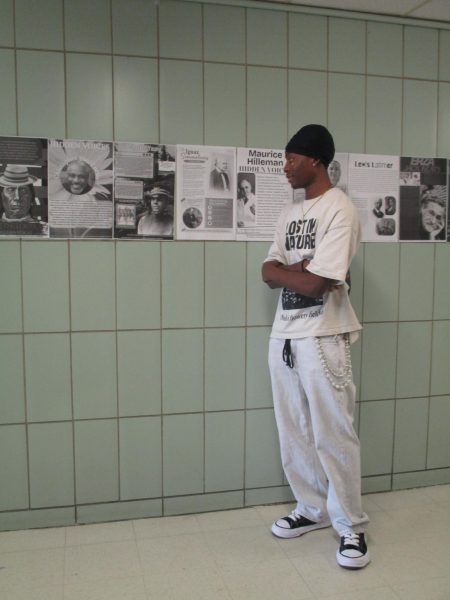
For example, Cardozo junior Sarrah Sanon decided to study Evelyn Boyd Granville. Granville was an American mathematician and computer scientist. She was the first African American woman to earn a Ph.D. in mathematics from an American university, Yale University, earning her degree in 1949.
Another junior chose to study Karen Horney, a German psychoanalyst whose main focus was the questioning of traditional Freudian views, specifically in theories of sexuality and whether your personality is affected by childhood trauma. Both of these women heavily impacted the United States and its history in different ways and yet are both deeply overlooked.
The idea that these beliefs and achievements are not taught in high school curriculums and yet are so important to our youth, going on to teach them about equality and inclusion especially in a society where women and minorities are still set aside in favor of men is absurd.
It is important that ideas, figures and values like these are taught in classrooms, especially at this stage in life because it is imperative to help our youth understand that their lives hold no bounds. That just because they are a minority or a woman or a foreigner does not mean they are incapable of the same achievements, positions and standards as those different from them. When all is said and done, it is important that children feel included and respected in their community and do not spend their time being self conscious in their own skin.
The fact that students are focusing on this can help to improve confidence, success and support within society and it can help to bring our community closer together. A big thank you to all the educators who helped make it possible to be aware of our history and its challenges.