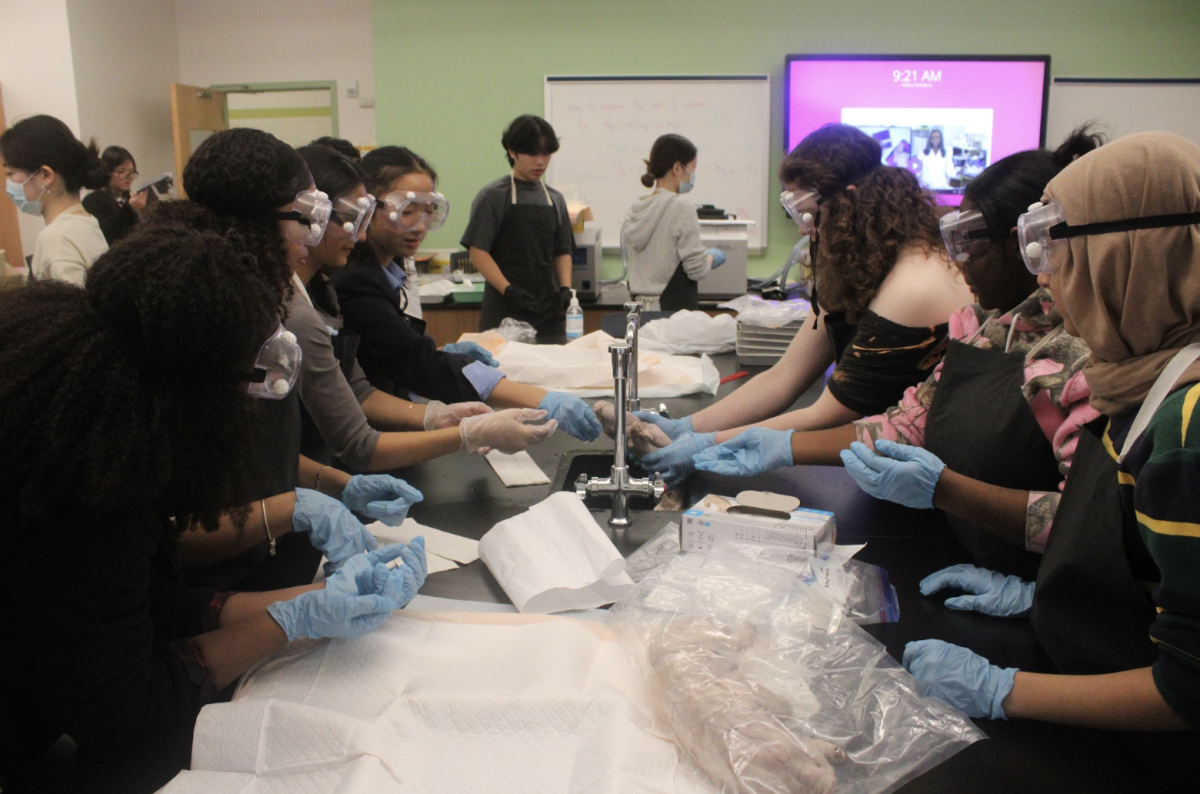
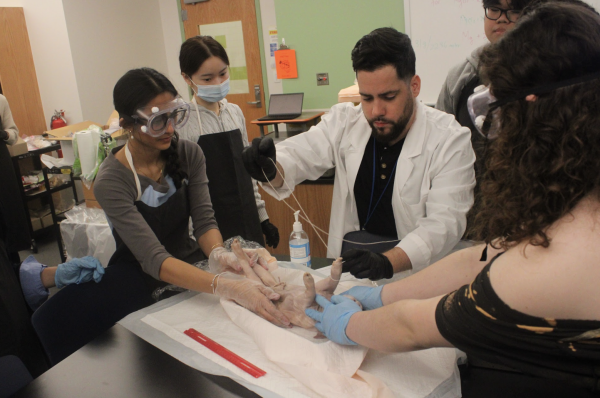
Cardozo’s bio-medical program dissected pig fetuses during their forensic and anatomy lesson in order to compare and contrast them to the human body.
In Mr. Munno’s class, the goal for the students is to learn about the anatomy of the human body by using the pigs. Mr. Munno explained that the setting simulates an autopsy of the human body, because the anatomy of humans and pigs favor each other. during the process, Mr. Munno guided students through each step and provided them with visual aids such as videos, as well.
This hands-on experience helps to prepare students who plan to be the next generation of doctors and nurses. Many of the students in the bio-medical program at Cardozo have hopes on entering college to study medicine, and these lessons give them a leg up on their peers by having some experience with anatomy and medicine.
The students in Mr. Munno’s class are highly receptive to this hands-on learning method, with many excited about the opportunity to engage in a dissection of this magnitude.
“This is pretty exciting,” said Diego, a senior in the program. “It’s actually quite similar to the human body. The organs and structures are very similar, and their placement is almost identical to ours.” This realization makes the dissection lesson even more valuable, as students understand how these biological systems function in a human context.
In Mr. Munno’s classroom, he emphasizes safety and hygiene. The room is meticulously cleaned before and after each session, and students are required to wear gloves, masks, and eye protection to ensure a sterile lab. Additionally, all tools are thoroughly sanitized after use. The importance of maintaining cleanliness is emphasized throughout the entire process, as proper safety measures are essential when working with biological specimens.
The ethical considerations of the dissection are also addressed transparently. “At no point was the pig alive,” Alexa, another 12th grader, added.
“It was a fetus, and the mother was euthanized humanely. The fetus was then donated to science for educational purposes,” she explained. The animals used for dissection come from ethical, regulated sources, which is an important aspect of the program.
While the dissection process is new for students in high school and not something they are used to working with, it teaches them humanity and professionalism that they will need in a future career in medicine. Each dissection should be approached with care and students are taught the proper attitude and techniques needed to complete the process.
This mimics things they would need to do in the real-world, should they continue on in a professional-level setting. These lab procedures give students tactical experience, as well as emotional and psychological, too.
These dissections are just one way that the bio-medical program at Cardozo prepares students. By engaging in dissection exercises and forensic examinations, students not only gain a deeper understanding of human anatomy, but also build the confidence and skills needed for future internships and medical practice.