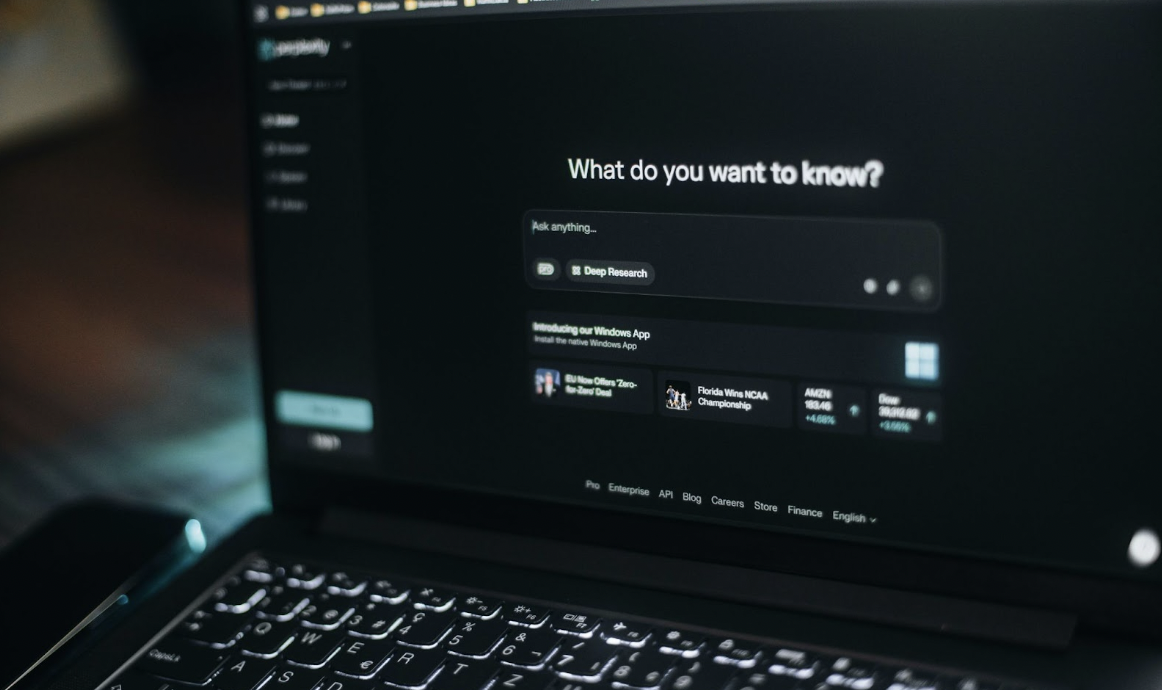
About 85% of teachers used AI in the 2024-2025 school year, according to a report released by the Center for Democracy and Technology. And, as more learning opportunities for generative AI are offered to teachers, the numbers are shown to continue to rise.
From lesson planning to worksheets to test review, AI has grown to become a helpful tool for many during the school year. AI has the ability to personalize learning, provide supplementary material, summarize notes, and apply feedback for students’ work. The engine has made itself a home at Cardozo, bringing with it divided opinions.
Senior Safa Rashid was first introduced to AI in the classroom through her teachers’ lesson plans and homework. She noted the difference between the level of difficulty of human-made questions and AI-made questions.
“The AI practice my teacher gave is very easy compared to the AP questions, and sometimes not significant to the lessons we’re covering,” Rashid remarked. “It feels like busywork and won’t properly prepare us for the AP exam.”
The concern over the effectiveness of AI learning has been mixed with worry over the purpose of placing true effort into schoolwork due to access to AI. A senior, who wished to remain anonymous, had shared their displeasure with teachers using AI for their presentations. They condemned the act because they believe it encourages students to use AI as well.
“It shows how if teachers don’t put effort into every aspect of their lessons, why should we? And when it is used as something to show the whole school, it is very disappointing to many students as well,” they explained.
The senior also addressed their frustrations with AI crafts. “Especially in artistic aspects. Teachers are so quick to shame AI writing, but then use AI art, which I believe is hypocritical. This also undermines the artistic students who feel like their efforts are not needed if even their teachers use AI.”
Some students understand the reasons behind student discouragement of AI use but free allowance for teachers, with a few exceptions. “I feel that the reason we are told not to use AI is so we are not tempted to be ‘spoon-fed’ the answers, without truly understanding the concepts,” Senior Amy Chen commented.
She later expanded on the role of teachers in helping students comprehend. “Their job is to help their students understand the concepts they are experts in. AI can be used as a supplement to enhance a teacher’s lesson, but it should not become the teacher.”
Senior Alice Cho agreed with Chen’s remarks and shined light on the years of learning and experience behind every teacher that demonstrates the control teachers would have for AI usage. With degrees and certifications under their belt, many teachers believe that they have the right to use AI to take the load off their shoulders. The knowledge that they obtained would be the bulk of their class, and AI as their part-time assistant.
Science teacher Ms. Zavurov stands by this statement. “We are competent professionals, state-certified and vetted to teach in the public schools. We are able to discern when to continue to engage vs. disengage with AI.”
Computer science teacher Mr. O’Neill had described his journey in discovering AI. Dedicating time to research AI tools, he has built websites and plans to take his skills and teach them to his students for them to bend AI to their will. He places much importance on guiding his students to get ahead of the curve in the job market that may be flooded by AI. In the meantime, he realized the convenience of AI for test data analysis, being able to identify which questions are the weak points for his students and quickly address them.
However, the imperfect nature of AI hangs in the air, which many teachers acknowledge. Social studies teacher Ms. Masterson had observed, “Sometimes AI is not accurate. Everything has to be thoroughly checked before use. For AP teachers, AI is not always as rigorous as needed for an AP class.”
With this warning, some teachers approach AI with much caution. Math teacher Mr. Chen has had opportunities to explore different AI engines, such as Claude and Magic School AI, as part of the Instructional Leadership Team. Mr. Chen has viewed AI’s function in lesson plan modification and edits for student recommendations. He holds a strict rule when it comes to the ethicality of AI.
He clarified, “There is a moral way to use AI as long as we are benefiting our students and are not profiting off of their use. We should be transparent when we use it.”
Ms. Kierez, AP of English/Library/Dance, further expressed the mindset that teachers should have to use AI responsively. “It should enhance instruction, not diminish originality or engagement,” she stated.
Even with the increased use of AI, teachers continue to have student connections at the forefront of their minds. Some question how the balance between technology and humans will be kept.
Mr. O’Neill proposes that teachers must focus on “to remain the ‘human in the loop,’ cross-checking every output for accuracy and ensuring that the personal connection to the students remains their priority.”
With AI solidifying its role in classrooms at a faster rate, some teachers encourage their peers to join the bandwagon while others support their refusal. In the end, it matters on the individual’s decision on how to embrace the new technology, if at all.