
The high school application process for New York City Public Schools is one of the most unique systems in the country; a process that every eighth grader dreads. Each school year, thousands of eighth graders wait anxiously for exam results, audition feedback, and ultimately, their high school application results.
It leaves the following question: Is the high school application process a smart way to match students with schools, or is it unnecessarily complicated and stressful for teens?
On one hand, the New York City application system gives students a choice as to where they want to attend high school. Instead of being filtered into a single, zoned school, the application process gives students more freedom in their choice. This allows students to travel further outside of their neighborhood for specific programs, such as arts, law, or science. The application process benefits students who want to specialize in an area where they show talent, or where they find passion.
The matching system for what high school students get into isn’t completely random, making things a bit more fair because it is not just based on luck sometimes. The algorithm matches applicants to school programs based on the order they rank them.
However, there are some negatives to the new process that many overlook. When applying to high schools, several factors determine whether a student gets in. The programs students apply to and the way they are ranked on one’s application matters because schools consider the order they are listed. Another factor is seat availability and special priority groups.
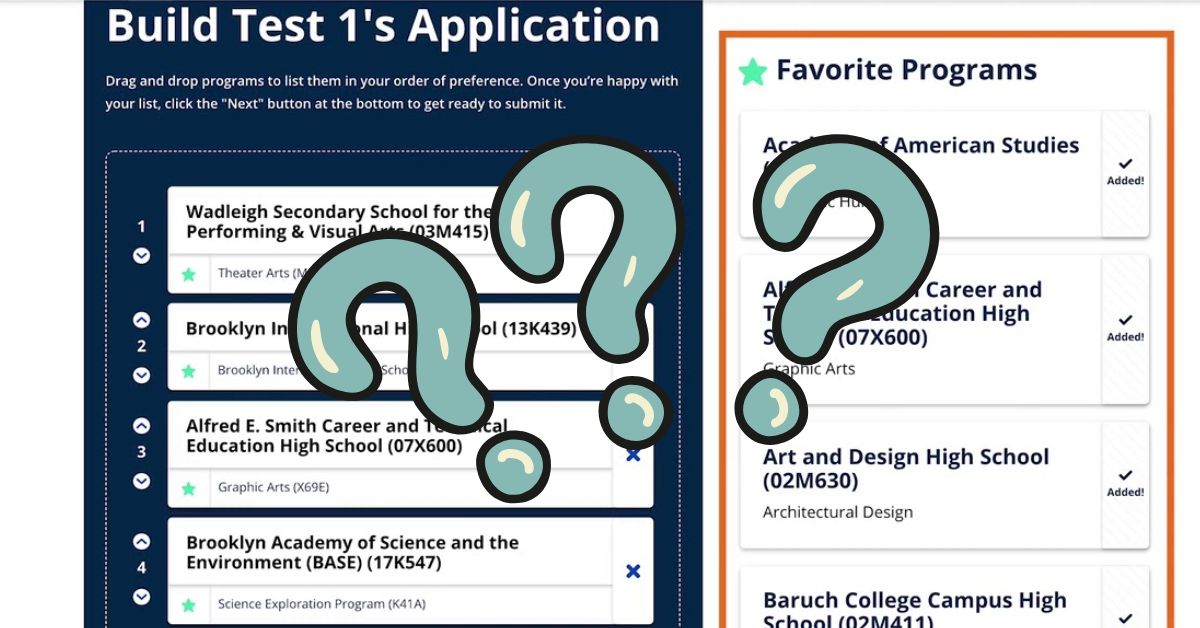
The most confusing and stressful part of the application process is ranking schools. Students have to list schools in order of preference, with the schools they want to attend the most on top. Some people say to put their dream schools first, but some also say to put safer options at the top. This kind of decision making is stressful for anyone.
Finally, one of the things that have become a huge source of debate is the system’s random assigned numbers. When a student begins the process of applying to high school, they are assigned a random number via lottery system. This number has nothing to do with grades or talent. These numbers can “make or break” a students’ admission.
When there are a high number of applications to a school, and all students have the grades to get in, random numbers will sort students as priority. The random number includes both letters and numbers, but are sorted both numerically and alphabetically via: 0, 1, 2, 3, 4, 5, 6, 7, 8, 9, A, B, C, D, E, F.
If a student has a “higher” number closer to 0, they would match with a school before someone with a number that is lower, closer to the letter. This number being completely random has caused a lot of dissatisfaction amongst parents and students because if they are assigned a bad number, it can hurt their chances of getting into the school of their choice.
Some, however, believe that the numbers make it fair and flexible because the numbers make the playing field a bit more equal.
The application process, overall, is stressful for students. Not many parents are fully aware of how the system works and the downside is that students are often given the wrong information or do not fully know how to figure out the system. Even though middle schools have guidance counselors, some schools may not have strong enough support, putting students who rely on their counselors at a disadvantage.
The biggest issue in this new application system is pressure. These students are middle schoolers already having to make a decision that can affect their future, such as college opportunities and future careers. The pressure of having to choose the right high school has become just as hard as choosing a college. It eventually leads to intense pressure on young kids.
And, after all of that work and stress, students may spend months researching what schools they want to go to and stressing over their application just to not get into the schools that they want. There are many situations where students don’t get into any of the schools listed on their application due to a high number of applications, bad random assigned numbers, or just overall bad luck.
For those who end up getting into the school that they want, the process may not seem all that bad. To them, this process isn’t completely inefficient, it just doesn’t benefit everyone.
The goal of the application system and “de-zoning” of schools was to make high schools more equitable for students whose families could not afford to live in areas with specific schools, however, it has become a huge contention of many families, with numerous people being let down by the results.