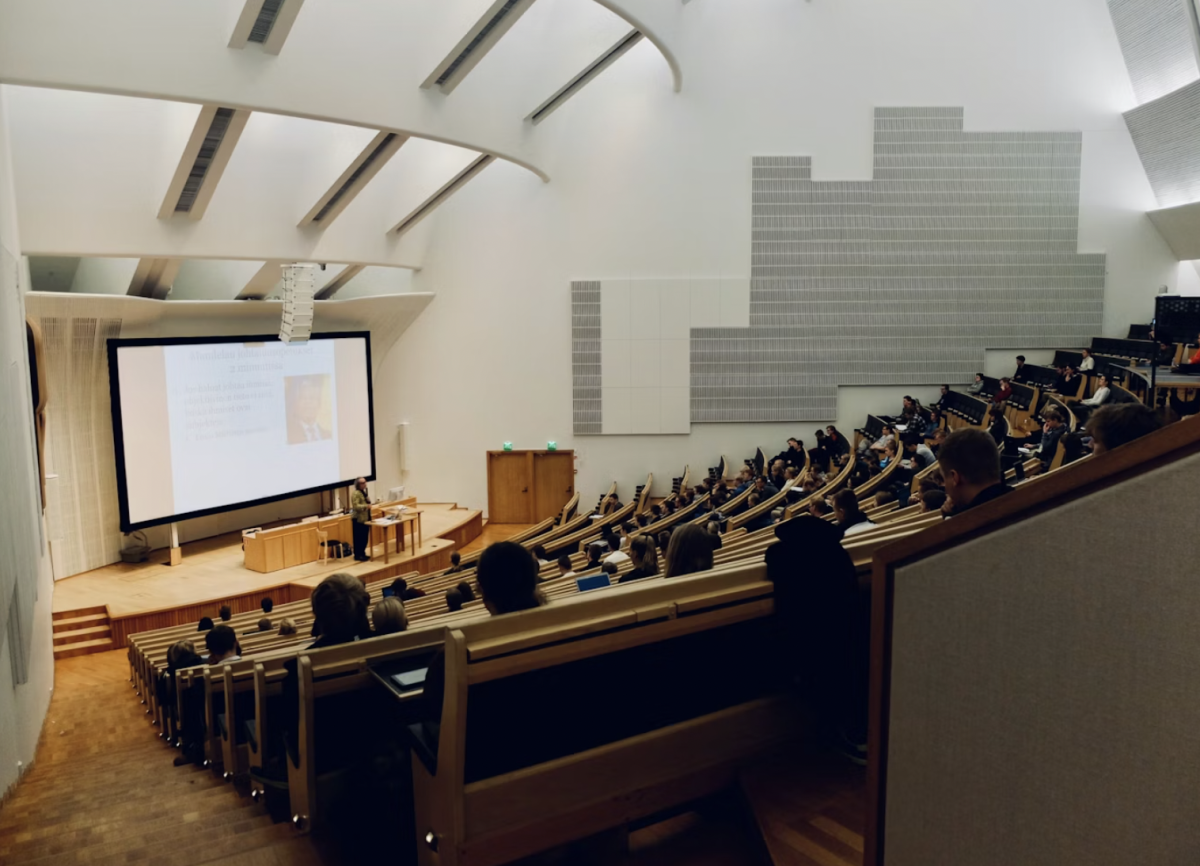
For decades to centuries, people have seen college as a gateway to success. By gaining a degree and pursuing a field with the resources you get from college, individuals gain financial stability, a step toward pursuing a dream, and a step toward achieving aspirations and goals. It was a guaranteed step idolized by parents, teachers, and students. Parents would encourage it, teachers would highlight the importance of it, and students would naturally go to college after school.
But in today’s society, the idea of going to college is not as prevalent as it used to be because of major obstacles that come with going to college.
Some obstacles include rising tuition costs, student debt creating overwhelming burdens, and other opportunities and ways to have an aspiring future. Students all across the country and even in Cardozo are questioning whether college is worth it in today’s society. National statistics, expert research organizations, and a survey conducted at Cardozo High School reveal a divide within the pursuit of higher education.
On one side of the debate, many people believe that college is still an important asset to have and to go to for an aspiring future and career. Research from College Board show that young adults with a bachelor’s degree earn a median salary of about $59,600, compared to $36,000 for those with only a high school diploma. Research from Pew Research also indicates students who graduate from college are more likely to be employed and less likely to experience any type of poverty.
For work-loaded and challenging careers like medicine, law, and engineering, a college degree is not an option to gain; it is a requirement for every job associated with those fields. Additional growing industries such as business, healthcare, and technology also require education beyond the diploma you gain from high school, as well. 70% of new jobs that have been created over the past decade require a bachelor’s degree as a minimum in order to apply, according to Georgetown University’s Center on Education and the Workforce.
Beyond the sense of income and financial stability, college provides a variety of opportunities and experiences for students to have a sense of exposure to the real world. Many students see these opportunities as a way to build sentimental and beneficial relationships, a chance to network, and to gain insight into future careers. Furthermore, many first-generation students acquire a sense of going to college to rewrite their family story and to act prudently, amongst their goals for the positive outcome they are looking for. College can also be beneficial for many students because the amount of resources is sufficient for students, such as alumni networks and experiences, that will help them be exposed and ensure a better chance of landing an adequate job.
Despite the staggering amount of jobs that require a college degree, an increasing number of Americans are no longer looking at college as the “end all, be all” of their future.
A 2025 NBC News poll found that 63% of Americans now believe a four-year college degree is not worth the cost, while only 33% still think it is. This statistic is a major shift from 2013, when the majority of people believed that college was worth it and everlasting. The reason behind this major shift was the amount of money and costs involved when going to college. As the economy has grown, inflation has increased, which leads to a rise in tuition prices.
Public university tuition has doubled since 1995, while private college tuition has risen 75% indicating the divide that tuition creates for many students who face economic inequality or financial instability. Additionally, many students often face the decision to take out student loans, resulting in student loan debt, which can limit the amount of financial freedom they have once they have obtained their degree and a job.
With this in mind, some employers have also shifted their hiring dynamics. Some hiring managers have begun analyzing a person based on their work experience and skills, rather than a degree. Examples of this include trade schools, tech. bootcamps, apprenticeships, and military pathways. These new fields can be just as beneficial for students to pursue because they often have fewer obstacles to face, such as debt, and can be more profitable for students.
These national trends were reflected in a recent survey conducted at Cardozo High School in November 2025. The data in the survey included over 100 student responses. While most respondents planned to attend college, their concerns were prevalent.
Of the survey findings, about one in three students are first-generation Americans, with 68% of students surveyed qualifying for free or reduced lunch. Of the students surveyed, 91% said that they plan to attend a four-year college, however, they have glaring worries and concerns. 82% of students said that tuition prices and debt are their number one concern and fear in regards to college. Additionally, 79% of those students also fear not getting a decent job after graduation. On top of this, 63% believe attending college is “only worth it for certain careers.”
Overall, there were only 19% of students surveyed who felt that attending college is worth it, no matter what.
The majority of students relayed that their desire to attend college stems from various pressures, such as family and financial stability. One anonymous student commented on the survey, saying, “I’m scared I’ll go into debt and regret my major.” Another student added, “My parents want me to go, but I don’t even know what I want to do.”
Students’ conceptualization of college, thought it means opportunity and a gateway for success, but as obstacles arise, the feeling of college being a worthwhile decision has diminished. There is a mix of fear and confusion when going to college, especially because of the pressure and uncertainty of life after college. One of the major fears that many teens face today is the ability to find a stable job after graduation. The rise of AI has created speculation and obstacles for students, as well.
The rise of AI in the job market has diminished many entry-level jobs across various industries. According to Gartner, 37% of organizations now use AI, and enterprise adoption has grown 270% in just four years. With AI revolutionizing the economy and the country and being a tool used by people every day, more jobs are looking to be taken over by AI. This would lead to unemployment for many college graduates, who are unable to find a place in a job market with clear competition.
With this in mind, teens are looking ahead as to what will really benefit them in the long run. Teens are looking for new ways to bypass education costs and instead, looking for ways to stand out in an oversaturated job market. Some approaches include entrepreneurship, using Artificial Intelligence (AI) software to run clothing brands, digital marketing services, and other digital revenue streams to gain income. There has been an increase in students participating in services such as digital marketing and other financial strategies, such as day trading, to gain income and stability in today’s economy. For some students, the idea of building a company with platforms such as TikTok, Shopify, and Instagram sounds far more appealing than going to college for four years. The aspects of creativity, leadership, and freedom are incorporated into these strategies, as well.
So, is college still worth it? The truth is complicated. The answer truly is dependent on the individual and what they see as the best fit. For many students, to acquire careers that require a degree, college is essential. But, for students who have uncertainty for their future, the door to college being a gateway to success is declining. Instead, the path of trade school, apprenticeships, and entrepreneurship has opened. The best way to find what best suits you is to act prudently, ask questions, gain insight from different perspectives, and anticipate outcomes.