
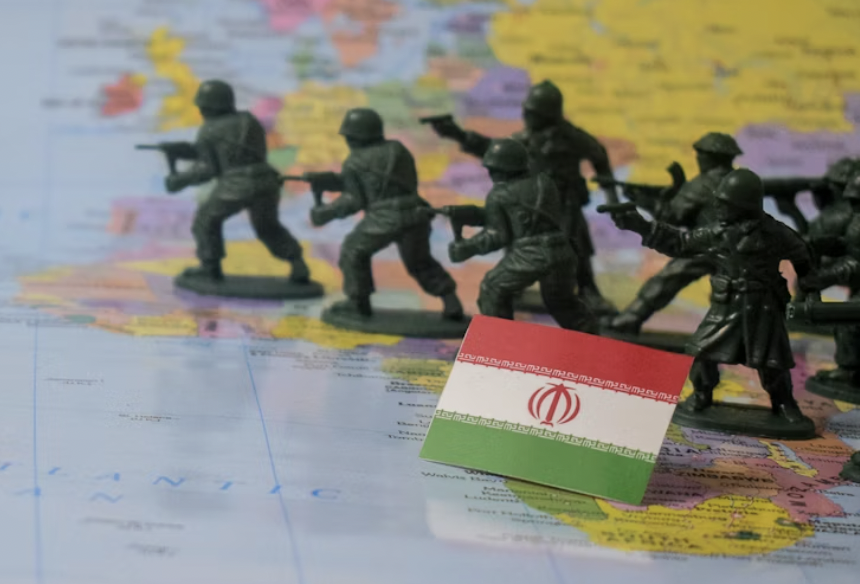
On Feb. 28, the U.S. invaded Iran, in a coordinated attack that targeted the Iranian’s military infrastructures and leadership.
“I guess,” said President Donald Trump when asked whether U.S. citizens should be worried about retaliatory attacks from Iran. “I guess” was the only statement he appeared to make with confidence.
Through the past month, there have been many developments within U.S. Foreign Affairs, sparking tension in the Middle East. Many notable events such as the death of leader Ayatollah Ali Khamenei and the deaths of citizens in Iran have had many American citizens wondering: how will these attacks and now-possible war impact people in the U.S. overall?
Throughout history, there has been tension between the U.S. and middle eastern countries. Many of these issues stemmed from oil, theocracies, and specific regional crises. Many report that the tension began in 1953, when Iran’s prime minister, Mohammad Mossadegh, was overthrown. The U.S. supported the shah, a monarch that was very pro-U.S. This led to immense resentment from those living under the Iranian government. In 1979, the Iranians overthrew the shah, and later established the Islamic republic. Following this, radicals stormed the U.S. Embassy in Tehran. They held 52 Americans hostage for 444 days, known as the Iranian hostage crisis.
The tension between the U.S. and Iran is not new, but the invasion of the country is something that only occurred in recent months. The elephant in the room for many citizens in the U.S. is specifically how will the ongoing tension and now attacks impact their way of life, the economy, or safety.
One of the biggest looming fears is a nuclear threat. Iran’s nuclear program is already a huge issue due to the fact that it would be easy to start manufacturing and producing because of the natural resources that the country has access to. Along with that, Iran already has nuclear facilities in the region that could be a target of the U.S. later on. Many Americans fear a retaliation attack on U.S. soil.
Another impact that many Americans worry about is how it will affect the U.S. military. Airstrikes and possible cyber attacks put both troops and citizens at risk. With the U.S. and Israel working together, a country Iran has been against for decades, it is feared that the U.S. will be collateral damage in their efforts to strike back.
Already, Americans have seen impacts of the conflict in Iran on U.S. soil. After the invasion of Iran, gas prices in the U.S. have gone up almost $1 per gallon. Before the attack, NBC reported gas prices were at $2.98 a gallon on Feb. 26, and later moved up to $3.93 per gallon. Many are angry as President Trump promised voters he would amend the economy, specifically gas and grocery prices.
The economy also suffers when wars or conflict break out, because stocks on the market can take a hit. With many U.S. citizens investing money for their families and children, when these stocks dip, they can lose money. A loss in money further impacts the economy, as they have less to spend on other things in life.
Overall, the main effects this conflict has on the American citizen domestically has to do with the military spending, gas prices, and tax dollars all needing to be reorganized because of the war. Americans will continue to see an economic “shock,” as experts call it, until the conflict is either resolved, or something changes.